The Balcón de Europa, the Caves, its beaches and coves, the weather each month and where to stay, told from Nerja by an estate agency with more than 25 years in the town.
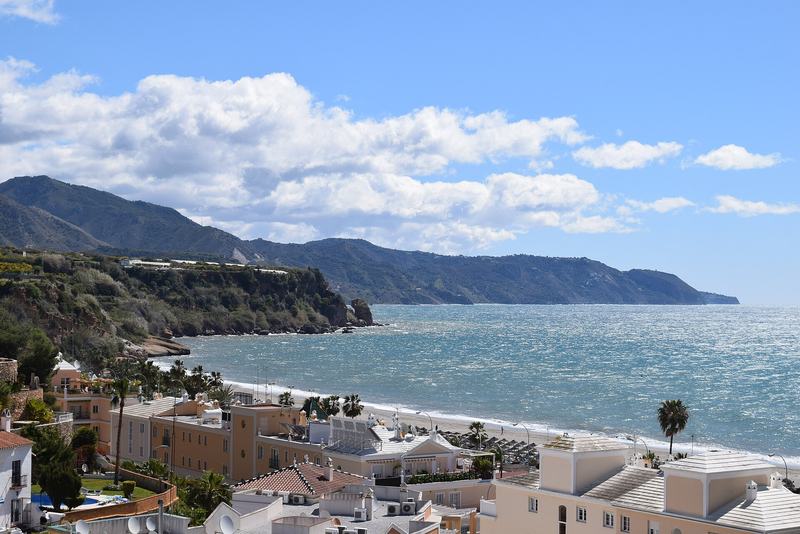
Nerja is the easternmost town on the Costa del Sol: a white old town on top of cliffs, coves with crystal-clear water and the Almijara mountains behind it.
In this guide we bring together what is really worth it, with checked facts (opening hours, festivals, the weather each month) and what we have learnt in more than 25 years working in Nerja.
4Blue Flag beaches in 2026
≈2.900hours of sunshine a year
17 °Caverage high in January
1 hfrom Málaga airport
Must-sees
What to see in Nerja: 10 places you can’t miss
From the Balcón de Europa to the Caves, by way of its coves, Maro and Frigiliana.
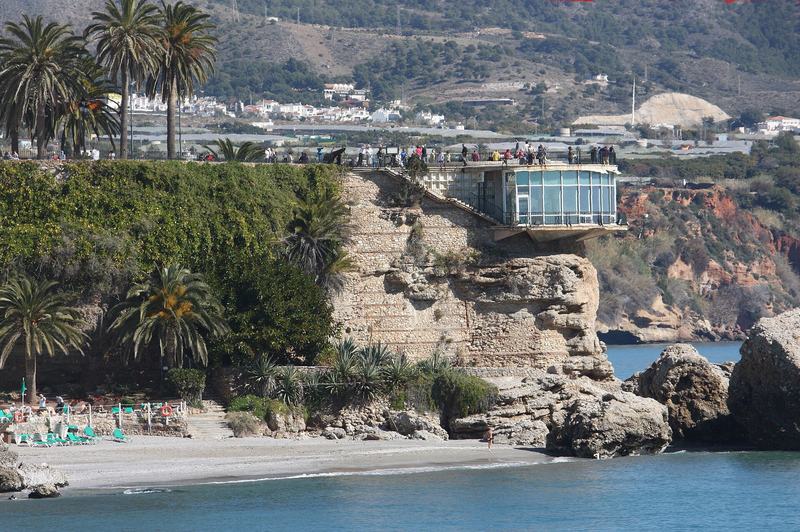
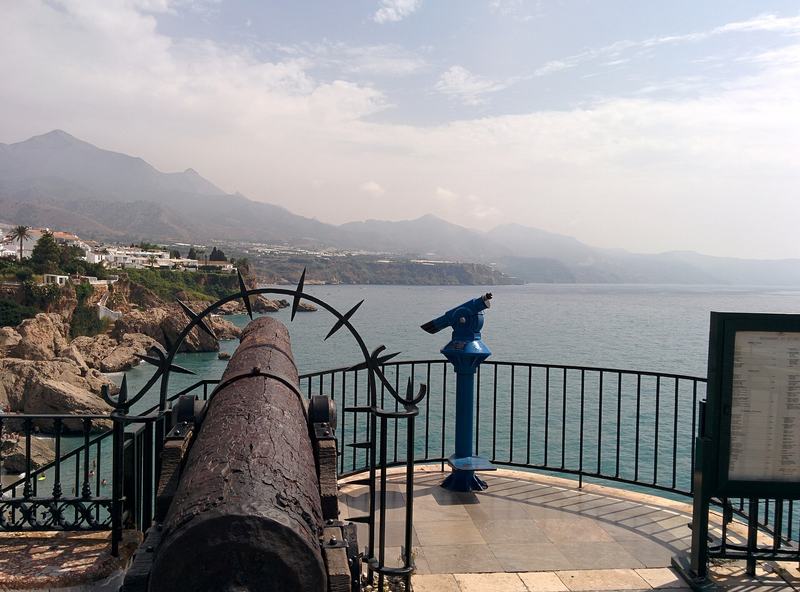
The symbol of Nerja: a palm-lined promenade that ends in a viewpoint over the sea, between two coves. Behind, the mountains; below, the boats of Calahonda. Tradition has it that King Alfonso XII named it the “Balcony of Europe” in 1885, and his statue still leans on the railing.
Come at sunset, then go down to the coves by the steps that lead off the promenade itself.
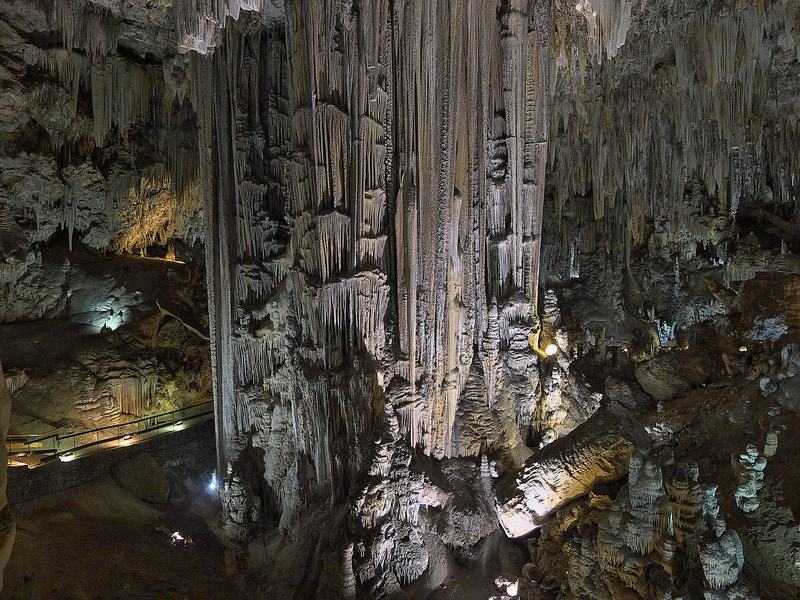
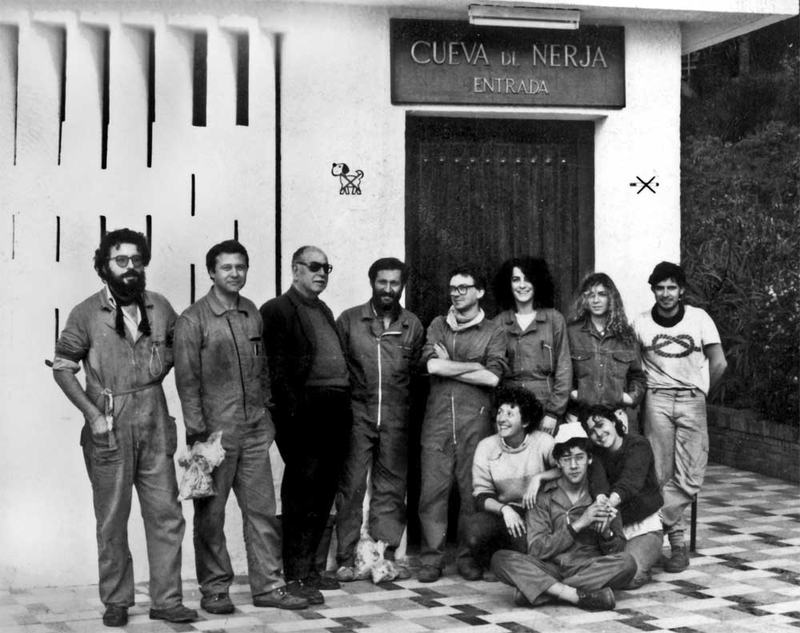
Almost five kilometres of galleries discovered in 1959, with enormous chambers and the Cataclysm Column, about 32 metres high. Buy your ticket on its website: it is cheaper and you avoid the queues. With it, the Nerja Museum is free for 10 days.
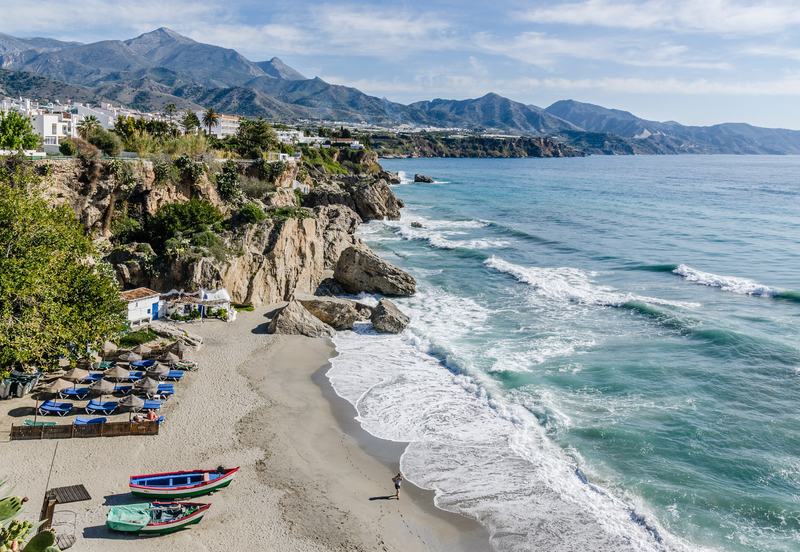
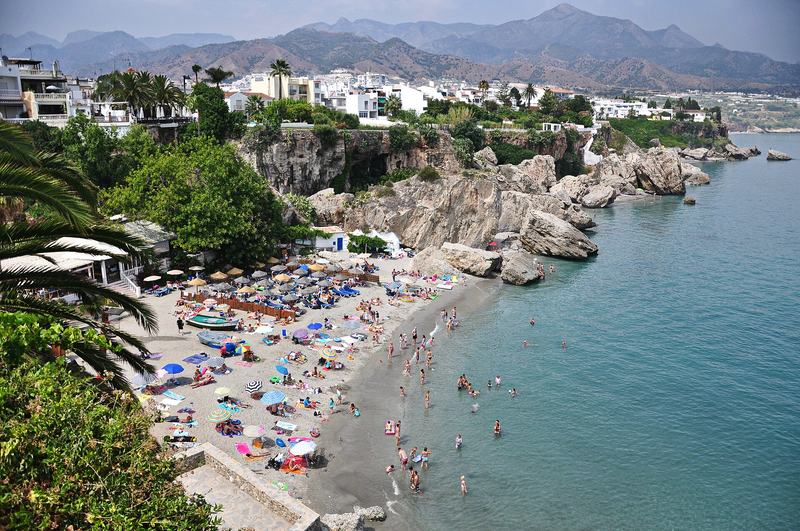
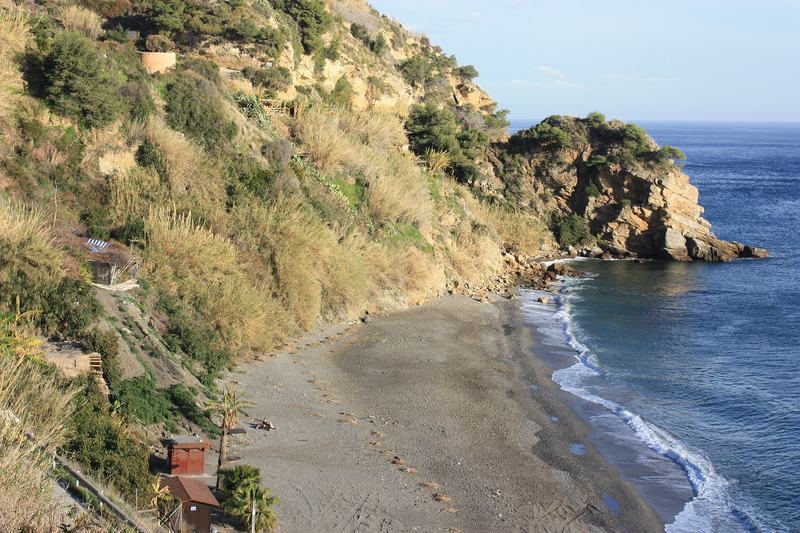
Six small coves are tucked away among the rocks below the Balcón: El Salón, La Caletilla, Calahonda, El Chorrillo, Carabeo and Carabeillo. Calahonda, with its fishing boats, is the postcard one.
Nerja’s big beach: about 800 metres of sand with a seafront promenade, beach bars, kayaks and a play area. It has a Blue Flag and is the favourite with families.
The old town: El Salvador, Las Angustias and the Museum
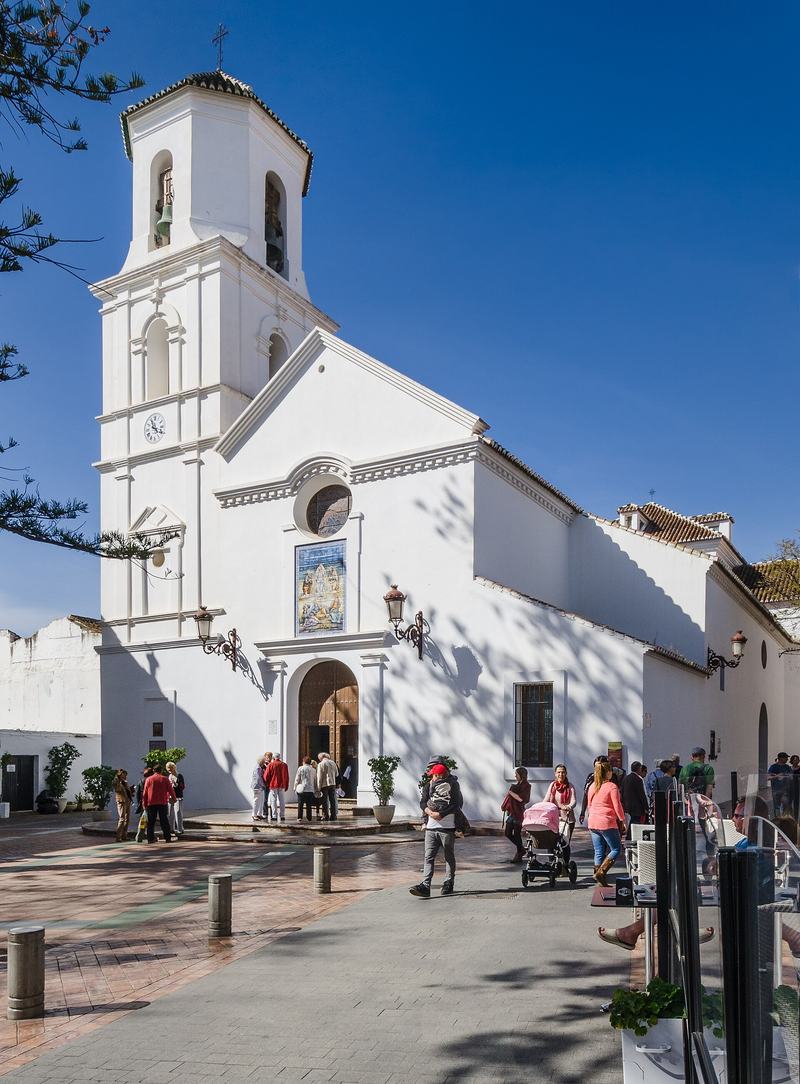
Next to the Balcón, the church of El Salvador, from the late 17th century. A few minutes away, the chapel of Las Angustias (1720), dedicated to Nerja’s patron saint, with its painted dome. And on Plaza de España, the Nerja Museum, with the town’s history since prehistoric times.
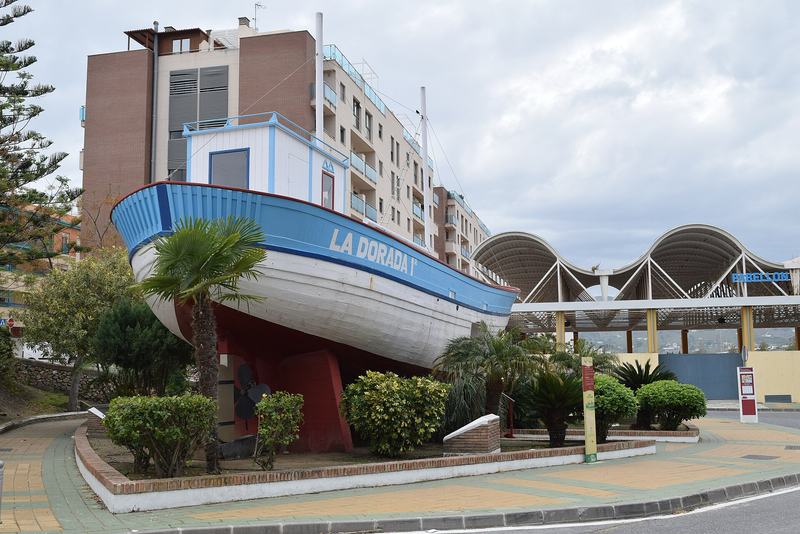
“Verano Azul” (Blue Summer), the Spanish TV series, was filmed in Nerja and first shown in 1981. This park in the west of the town has the replica of “La Dorada”, Chanquete’s boat: a must for anyone who grew up with the series.
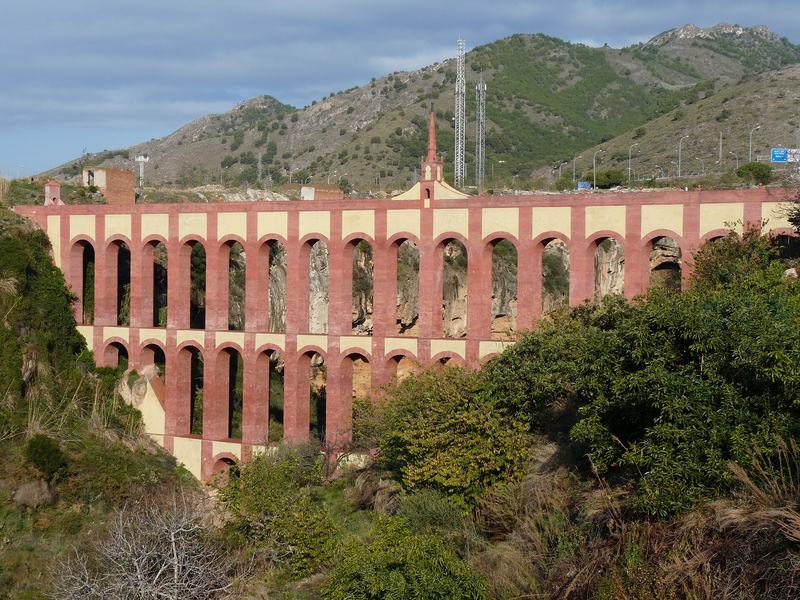
Maro is Nerja’s little village, next to the Caves: white houses, market gardens and viewpoints over the sea. At its entrance, the Acueducto del Águila (Eagle Aqueduct), from around 1880, rises in four tiers of brick arches to carry water to the old sugar factory.
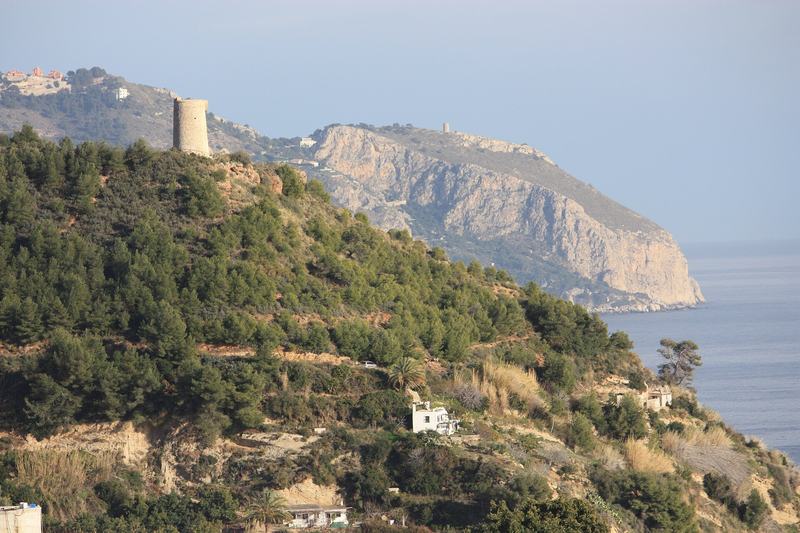
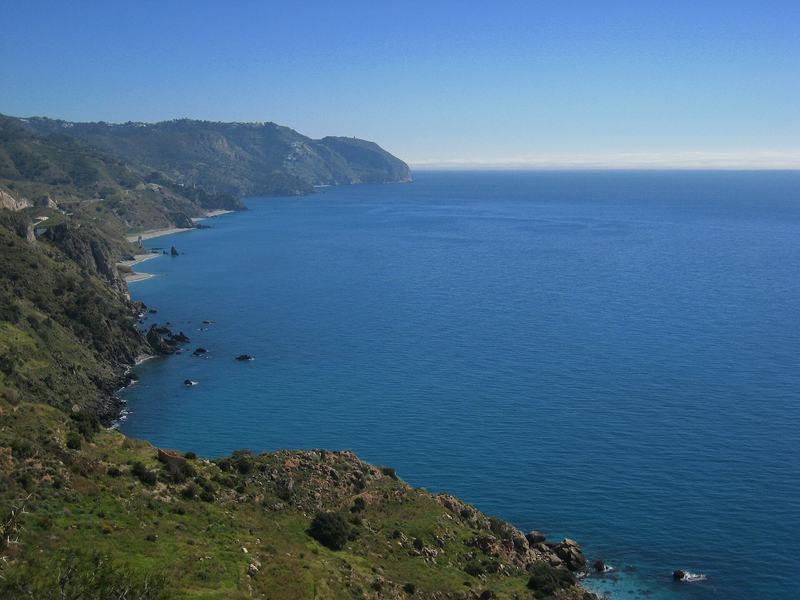
A protected nature reserve since 1989: cliffs, almost untouched coves and watchtowers from Maro to Cerro Gordo. You can explore it by kayak, walk down to its coves and see it all from the viewpoints along the road.
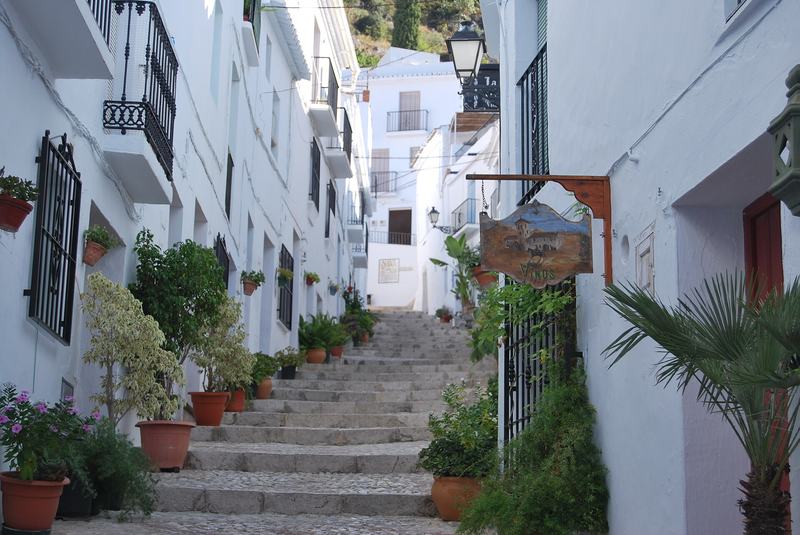
7 km away, one of “The Most Beautiful Villages in Spain”: steep lanes of white houses in its Moorish quarter and views of the sea. At the end of August it holds the Frigiliana 3 Cultures Festival.
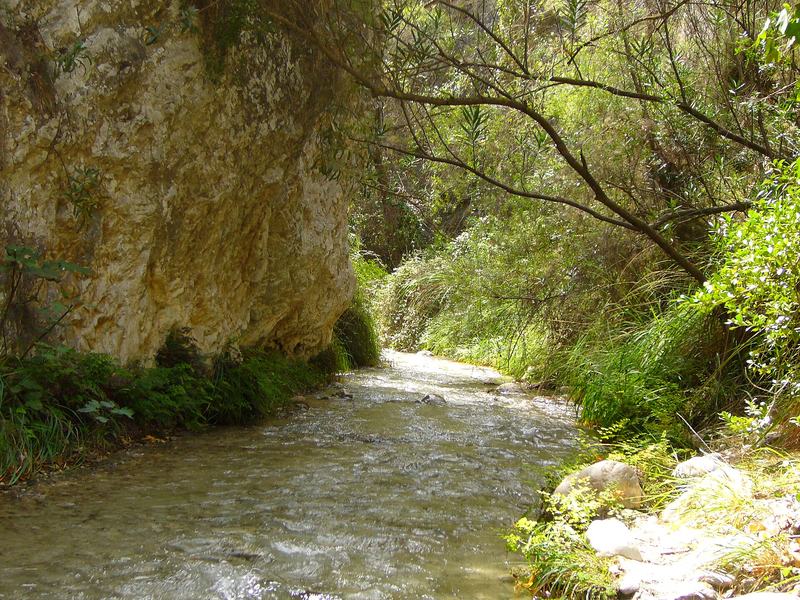
Nerja’s most famous walk: wading up the river, ankle-deep, to Los Cahorros, a narrow gorge. It has been closed to the public since August 2023: the Andalusian regional government is working on controlled access with a visitor limit. Before you go, ask the Town Hall whether it has reopened.
Closed
West of the town
Map and details
Nerja beaches: all of them, from El Playazo to El Cañuelo
Fifteen beaches and coves, from the longest to those hidden among the cliffs, with four Blue Flags in 2026.
The longest in Nerja, with easy parking, beach bars and sunloungers. Even in summer it is usually quieter than the ones in the centre.
2
El Chucho
Blue Flag
150 m
Small, at the mouth of the Chíllar river and next to the Verano Azul Park. It shares the Blue Flag with El Playazo.
3
La Torrecilla beach
Blue Flag
300 m
Accessible
At the end of the promenade, with ramps, showers and sunloungers. An easy walk from the centre.
The coves below the Balcón de Europa
4
El Salón beach
200 m
Steps
Between cliffs, west of the Balcón. You go down by steps and it has hardly any facilities: a quiet spot right in the centre.
5
La Caletilla
50 m
Fine sand
Tiny, with views of the Balcón de Europa, next to El Salón.
6
Calahonda beach
120 m
Snorkelling
The postcard one: dark sand, fishing boats and white houses above. You go down from the Balcón itself, and it has a small beach bar.
7
El Chorrillo
Cove
Snorkelling
A small cove between Calahonda and Carabeo, separated by rocks: calm water and good seabed for snorkelling.
8
Carabeo beach
120 m
Steps
Coarse sand and shingle at the foot of a steep stairway from Calle Carabeo. No facilities, and lots of charm.
9
Carabeillo
Cove
Shingle
The last cove before Burriana, small and with fine shingle.
Burriana
10
Burriana beach
Blue Flag
800 m
Families
Nerja’s big beach, with a seafront promenade, beach bars, kayaks, showers and a play area. It has the most facilities.
Maro and the cliffs
11
La Caleta de Maro
Cove
Kayaking
Quieter than Maro beach. You get there by kayak or on foot, along a path between greenhouses.
12
Maro beach
Blue Flag
400 m
Snorkelling
Crystal-clear water at the foot of the cliffs: the favourite for snorkelling and kayaking. The way down is steep and the car park small, so it is best to arrive early.
13
Las Alberquillas
400 m
No facilities
Pebbles and crystal-clear water right in the nature reserve. You walk down a path from the road.
14
Cala del Pino
350 m
Snorkelling
Stones and an excellent seabed for snorkelling. The way down, by a path from the road, is demanding.
15
El Cañuelo beach
350 m
Beach bar
The last beach in Nerja towards Granada, in an almost untouched setting. In high season you go down by minibus from the car park above.
A tip for the beaches of Maro and the cliffs: arrive before 11 am in July and August. The car parks at the top are small and fill up; in summer there is usually a shuttle bus. Photo: Dguendel · CC BY 4.0
Plans and activities
Things to do in Nerja: sea, mountains and good food
Kayaking between cliffs, mountain walks, the street market and day trips less than an hour away.
The star outing of the summer: by kayak from Burriana or Maro beach to the coves of the nature reserve and the Maro waterfall, which falls straight into the sea. Guided routes last about two hours, with stops for a swim, and kayaks can be hired in Maro from March to October.
For snorkelling, the best seabed is at Maro, Cala del Pino and the coves below the Balcón.
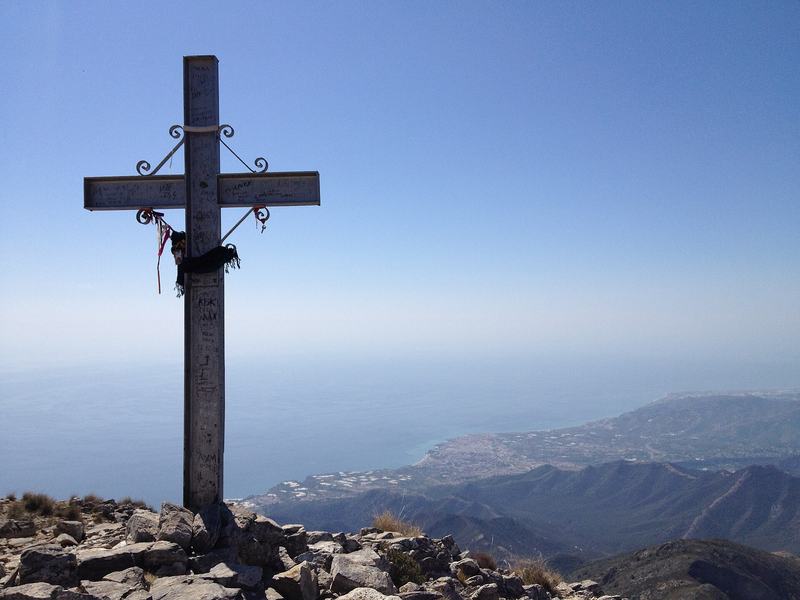
El Cielo (1,508 m) is the peak you can see from the Balcón, in the Sierras de Tejeda, Almijara y Alhama Natural Park. The climb starts near the Caves along a forest track and gains about 1,300 metres: it is demanding, so start early and take plenty of water. At the top, the whole coast lies at your feet.
In summer, check first whether there are access restrictions due to fire risk.
Full day
Demanding
The Tuesday market
Every Tuesday morning on Calle Mirto: local fruit and vegetables, clothes, crafts and plenty of atmosphere.
Eating like a local
Fried fish, sardine skewers (espetos) and ajoblanco; and from the Axarquía, mangoes, avocados, Moscatel wine and Frigiliana’s cane honey. Beach bars, tapas bars and restaurants in where to eat in Nerja.
Detunda Botanical Garden
Next to the Caves, more than 200 plant species from the mountains and coast of Málaga and Granada.
Day trips close by
Frigiliana 15 minutes away; Málaga, about 50; and Granada with the Alhambra, just over an hour by car.
Sunset at the Balcón
The simplest plan, and the one nobody skips: the sun setting over the coast from the viewpoint.
The year’s festivals
Carnival, San Isidro, San Juan, the Virgen del Carmen and the October Fair: the dates are in Nerja month by month.
Weather and festivals
Nerja month by month: weather, sea temperature and things to do
Mild winters, beach summers and a festival almost every month: this is Nerja through the year.
Average temperatures on the Nerja coast
Air: high and low
Sea water
Air: AEMET averages for Málaga airport (1981-2010), the nearest station with a long record. Sea: approximate averages from satellite data.
Nerja in January
17° high7° low
Sea 15 °C
6 h of sunshine
6 rainy days
The coolest month, although it is pleasant in the sun at midday. A good time to walk along the coast and in the mountains and see the town at a relaxed pace.
5 January: Three Kings parade. The Caves close on the 1st and the 6th.
Nerja in February
18° high8° low
Sea 15 °C
6 h of sunshine
5 rainy days
Mild days that keep getting longer. Carnival fills the old town for a weekend, with a parade on Saturday and the “Burial of Chanquete” to close it.
Nerja Carnival (February or early March).
Nerja in March
20° high10° low
Sea 15 °C
7 h of sunshine
4 rainy days
Spring arrives, with highs of almost 20 °C. It is the best time for hiking, before the heat sets in.
Holy Week 2027: 21 to 28 March.
Nerja in April
21° high11° low
Sea 16 °C
8 h of sunshine
5 rainy days
Green countryside and the first afternoons on the terrace. The bravest already go for a swim, with the water at about 16 °C.
A good month for Frigiliana or El Cielo peak.
Nerja in May
24° high14° low
Sea 18 °C
9 h of sunshine
3 rainy days
Summer is in the air: more than 9 hours of sunshine a day and the sea getting warmer and warmer.
15 May, San Isidro: pilgrimage from the Balcón to the Caves (the Caves close that day).
Nerja in June
28° high18° low
Sea 20 °C
11 h of sunshine
1 rainy day
The beach season begins, with the longest days of the year and still without the August crowds.
San Juan’s Eve (23 June) on the beaches.
Nerja in July
31° high21° low
Sea 22 °C
11 h of sunshine
Almost no rain
High summer: 11 hours of sunshine a day and the sea at about 22 °C. Go to the Maro coves early.
16 July: the Virgen del Carmen is taken out to sea from La Torrecilla.
Nerja in August
31° high21° low
Sea 23 °C
10 h of sunshine
1 rainy day
The hottest month, with the warmest sea of the year. It is high season: book your accommodation well ahead.
End of the month: Frigiliana 3 Cultures Festival.
Nerja in September
28° high19° low
Sea 22 °C
9 h of sunshine
2 rainy days
For many, the best month: the sea is still warm and there are fewer people than in August. Perfect for kayaking and snorkelling.
Quieter coves and the water still at 22 °C.
Nerja in October
24° high15° low
Sea 20 °C
7 h of sunshine
4 rainy days
A mild autumn, with highs of 24 °C and the water still good for the last swim of the year.
Nerja Fair, in the second week of October.
Nerja in November
20° high11° low
Sea 17 °C
6 h of sunshine
6 rainy days
The rain returns, though only on a few days, and the town is calm again. Good weather for walking and eating out in the sun.
Walks in the mountains and the villages of the Axarquía.
Nerja in December
18° high9° low
Sea 16 °C
5 h of sunshine
7 rainy days
A mild Christmas, with the centre lit up. It is the month with the most rainy days, although there are still few.
The Caves close on 25 December.
From prehistory to today
History of Nerja, from the Caves to the Balcón de Europa
Romans, Moors, sugar cane, a king, five lads and a TV series.
Prehistory
A cave inhabited for thousands of years
The Nerja Caves were a shelter in prehistoric times. In the Nerja Museum you can see “Pepita”, a skeleton more than 9,900 years old found there.
Roman times
Detunda
Near Maro there was a Roman settlement, Detunda, which today gives its name to the botanical garden at the Caves.
Al-Andalus
Narixa
That was the town’s name, and it is where “Nerja” comes from. Tradition translates it as “abundant spring”.
1487
The Crown of Castile
After the Catholic Monarchs took Vélez-Málaga, Nerja passed to Castile.
16th to 19th centuries
Watchtowers and sugar cane
Towers like the one at Maro warned of pirate attacks, and sugar cane became the area’s great source of wealth.
1812
Farewell to the coastal battery
During the Peninsular War, the battery that stood where the Balcón de Europa is today was destroyed.
It was built to carry water to the San Joaquín sugar factory in Maro.
1885
Alfonso XII and the “Balcony of Europe”
After the Christmas earthquake of 1884, the king visited the area. Tradition says that, looking out from the viewpoint, he called it the “Balcony of Europe”; today a statue of him looks out to sea.
1959
The Nerja Caves are discovered
On 12 January, five young men from Maro and Nerja looking for bats stumbled upon it. A year later it opened to the public and tourism began to arrive in Nerja.
The TV series, filmed in Nerja, is first shown and makes the town famous throughout Spain.
1989
Nature reserve
The Maro-Cerro Gordo Cliffs are declared a nature reserve.
2006
Site of Cultural Interest
The Nerja Caves receive the highest level of heritage protection.
Today
Four Blue Flags
Burriana, Maro, El Playazo-El Chucho and La Torrecilla have a Blue Flag in 2026.
Our tip
Where to stay in Nerja: the best areas
Each area has its own style: we will help you choose the one that suits you.
Centre and Balcón de Europa
Everything close by and on foot: the Balcón, the coves, restaurants and shops. For couples and for anyone who doesn’t want a car. In summer it is livelier, and a little noisier.
Ideal for: couples · short breaks
Burriana and Parador
Next to the big beach and its promenade, a quarter of an hour’s walk from the centre. A beach with every facility right by your door.
Ideal for: families · beach every day
Capistrano
Developments on the hillside above Burriana: apartments with a communal pool and sea views. There are hills, so a car is a good idea.
Ideal for: views · pool · peace and quiet
La Torrecilla and El Playazo
The west of Nerja: flatter streets, the longest beach and the Verano Azul Park. From La Torrecilla you can stroll to the centre.
Ideal for: long stays · level walks
Maro, Frigiliana and the countryside
Houses with a pool among the mountains or next to the Caves, to really switch off. A car is essential.
Ideal for: groups · switching off
Do you know when you’re coming?
Houses and apartments in all these areas, with direct online booking.
In the morning, the Balcón de Europa, the church of El Salvador and the coves below, such as Calahonda. Mid-morning, the Nerja Caves (best with a ticket bought on their website) and, next door, Maro and the Eagle Aqueduct. In the afternoon, the beach at Burriana and, to finish, sunset from the Balcón.
Which is the best beach in Nerja?
It depends on what you are looking for: Burriana for families, with a promenade, beach bars and a Blue Flag; Maro for swimming between cliffs in the clearest water; Calahonda for the postcard view, at the foot of the Balcón; and El Playazo if you want space, as it is the longest, at about 1.8 km.
When is the best time to visit Nerja?
For the beach, June to September: in August the water is warmest (about 23 °C), but it is also busiest. May, June, September and October combine good weather with fewer crowds. In winter average highs are around 17-18 °C: a good time to walk and see the town at a relaxed pace.
Do you need to book to visit the Nerja Caves?
It is not compulsory, but the Caves themselves recommend buying your ticket on their website: it is cheaper and you avoid queues. They open every day except 1 and 6 January, 15 May and 25 December (2026 calendar). With the ticket, the Nerja Museum is free for 10 days.
Can you do the Chíllar river walk?
As of this guide, no: the Chíllar river has been closed to the public since August 2023. The Andalusian regional government is working on controlled access with a visitor limit; before you go, ask Nerja Town Hall whether it has reopened.
How do you get to Nerja from Málaga airport?
By car it is about 70 km on the A-7 motorway, a little under an hour. By bus, Alsa has a few direct services from the airport and many more from Málaga bus station, a journey of about 75 minutes.
Is Nerja cold in winter?
Not very. In January average highs are around 17 °C and lows around 7-8 °C, with about 6 hours of sunshine a day. A jacket is enough for the evening.
Which villages are worth visiting near Nerja?
Frigiliana, 7 km away, is the must-do trip. Further afield, Torrox and Cómpeta in the Axarquía, Almuñécar and La Herradura on the Granada coast, Málaga about 50 minutes away and Granada, with the Alhambra, just over an hour.